
I did another ‘Clerk of Works’ visit yesterday to a new-build site yesterday to give the client the reassurance that the fire doorsets fitted were compliant and fit – for – purpose.
As usual the reality of the situation was far from ideal and definitely not what the client wanted to hear.
I only managed to do a quick check of 16 of the doorsets fitted – but it was enough.
16 doorsets checked.
How many faults would you imagine?
10?
15?
20?
30?
50?
100?
More than 100?
105 to be exact.
That’s right ONE HUNDRED AND FIVE FAULTS WITH 16 DOORSETS.
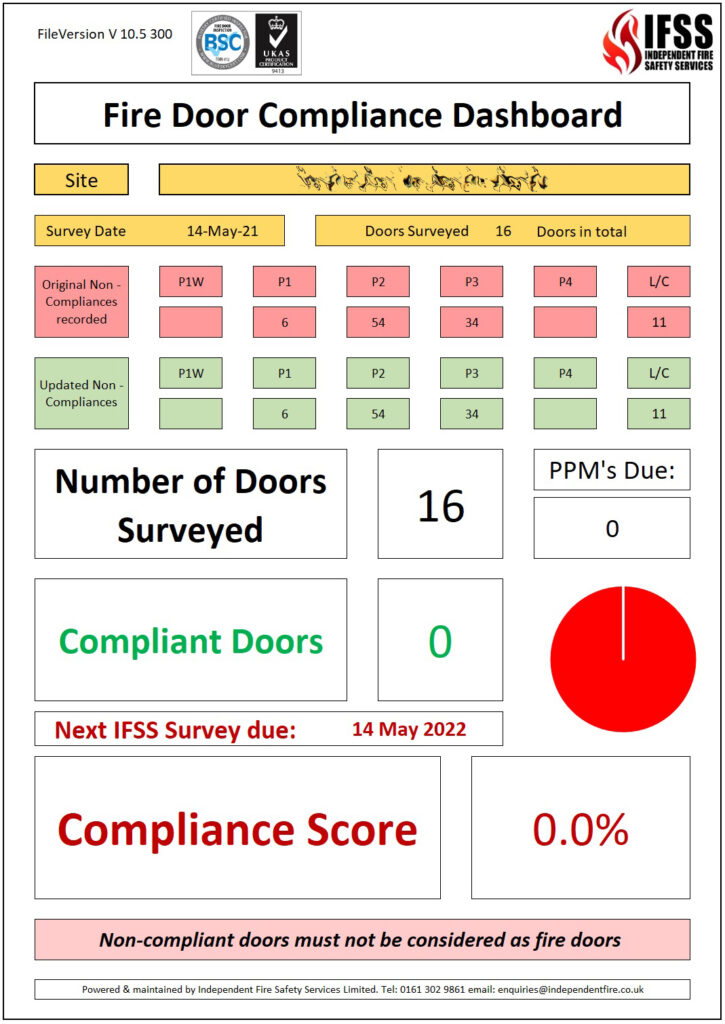
To be fair, almost 45% of the faults I would consider to be minor, almost irrelevant in the great scheme of things, but they still shouldn’t have been there on a new building!
The majority of the faults though are far more serious:
Excessive gaps.
Smoke seal not in contact with the door.
Doors not closing fully.
Doors catching on the floor when opening and sticking / damaging the floor.
Under-door gaps I could limbo under (particularly on stairwell doorsets).
Any one of these faults in isolation would probably result in a doorset not performing to the level required but putting them all together on most of the doors would virtually guarantee they failed far, far sooner than their claimed rating.
Two in one.
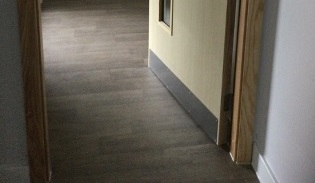
On this particular door we have a double whammy. The door sticks on the floor when opened to about 80⁰ (and indeed the floor covering is already damaged) but when the door is closed the under-door gap is at points more than twice as large as is permitted!
So the gap is too small, and it’s too big – on the same door!
How do we break the cycle?
It’s simple really, just get us, or someone like us, involved much earlier in the build process. Definitely before the fire doors are installed but ideally much earlier than that.
Admittedly the doorset in the picture above should never have been fitted. The installer should have approached the site management team and explained that the floor levels were wrong and rectification works were required before the doorset could be fitted. Mind you, this may have been the case and the installers could have been forcibly instructed to ‘get on with it’ to maintain the build program.
If we, or one of my colleagues in the industry, had been asked to attend at the correct stage we would have had the opportunity to discuss ‘common issues’ with the site management team. We could have explained that on a smoke control door the maximum permitted under-door gap for doors without a threshold seal was 3mm. We could have highlighted that the floor across the doorway needed to be absolutely level (not as difficult as it perhaps sounds) and critically the floor around the ‘arc of opening’ of the door needed to be level also (ideally) but certainly not higher than the floor immediately under the door.
As things stand on this site the client has the unfortunate task of going back to the Main Contractor and explaining to them that the building that is due to be handed over very shortly is in reality nowhere near and that to get the fire doors to be complaint, and firesafe, will required a great deal of remedial works.
Cost before compliance?
Very few people enjoy paying bills, even more so when that bill is from a ‘consultant’, a person that doesn’t actually provide any ‘material’ element to a building and I believe this is the main factor in the relatively few building projects we are involved in at the correct stage in the program.
I guarantee this though: the remedial costs for the site I visited yesterday will be far, far higher than my fee for yesterday – probably 100 times or more.
So, is the cost of compliance really that high, or is it just a case of spending that money wisely to limit the cost?